Dinosaur Guide: A Comprehensive Overview
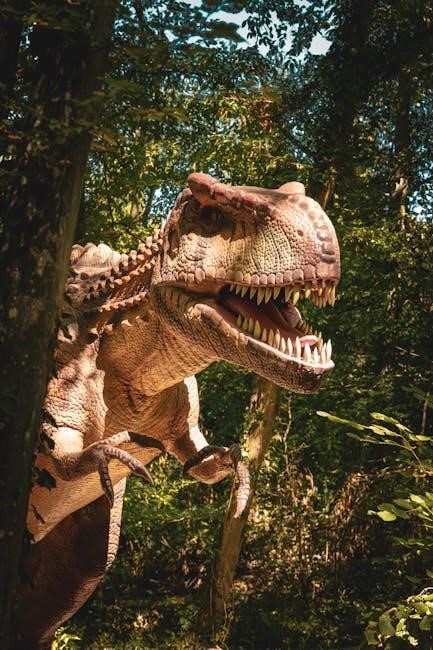
This guide explores the fascinating world of dinosaurs‚ from their initial discoveries to modern paleontological research‚ covering species‚ characteristics‚ and extinction theories.
What are Dinosaurs?
Dinosaurs were a diverse group of reptiles that dominated terrestrial ecosystems for over 180 million years‚ ranging from the Triassic period through the Cretaceous. Paleontologists study their fossilized bones‚ footprints‚ and even eggs to reconstruct their ancient lives. These creatures exhibited incredible variations in size‚ diet‚ and behavior.
An identification guide helps distinguish between species like Coelophysis and Diplodocus. Understanding dinosaurs involves examining their height‚ length‚ weight‚ speed‚ and the geological time period they inhabited‚ revealing a complex prehistoric world.
The History of Dinosaur Discovery
The pursuit of understanding dinosaurs began with fragmented fossil finds‚ evolving into a dedicated scientific field. Early discoveries‚ like the skull unearthed in Alberta‚ Canada on August 12‚ 1884‚ by Joseph B. Tyrrell‚ sparked public and scientific interest.
This initial find‚ a 70-million-year-old specimen‚ marked a turning point. Today‚ research utilizes advanced technology‚ aided by tools like Microsoft’s Copilot‚ to analyze fossils and reconstruct dinosaur lives‚ building upon this historical foundation.
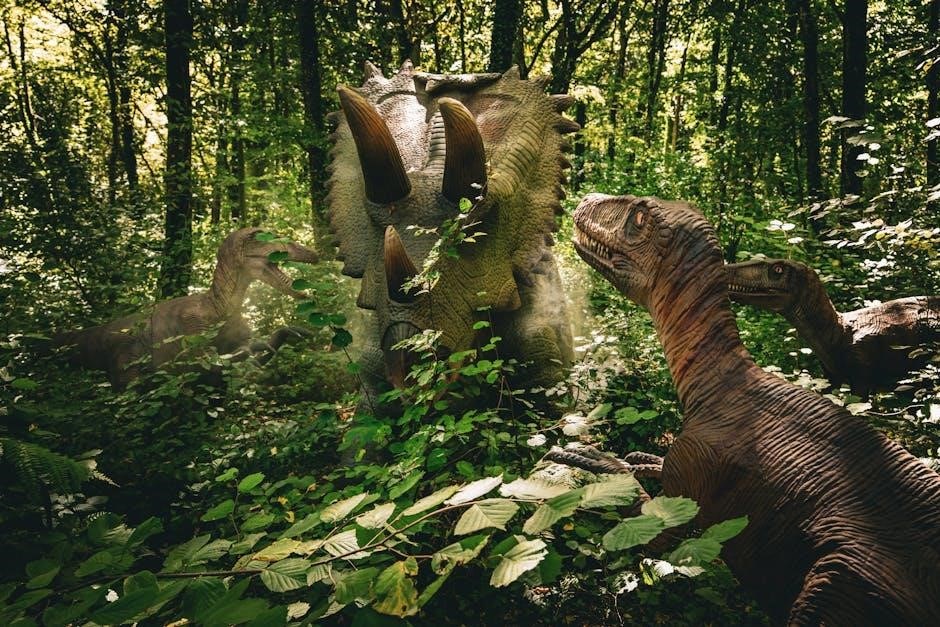
First Discoveries in Alberta‚ Canada
Alberta‚ Canada‚ holds a significant place in dinosaur discovery history. In 1884‚ Joseph B. Tyrrell’s accidental finding of a 70-million-year-old dinosaur skull initiated focused paleontological exploration in the region. This discovery wasn’t isolated; Alberta’s sedimentary rock formations proved rich in fossilized remains.
These early finds laid the groundwork for understanding prehistoric life in North America‚ establishing Alberta as a crucial site for paleontologists and inspiring further research into dinosaur evolution and extinction.
Major Dinosaur Groups
Dinosaurs are broadly classified into two major groups: Saurischian and Ornithischian‚ defined by their hip structure. Saurischians‚ or “lizard-hipped” dinosaurs‚ include theropods – the mostly carnivorous group containing Tyrannosaurus Rex – and sauropods‚ the long-necked herbivores like Diplodocus.
Ornithischians‚ or “bird-hipped” dinosaurs‚ encompass a diverse range of herbivores‚ featuring species like Triceratops and various armored dinosaurs. Understanding these classifications is key to tracing dinosaur evolution.
Saurischian Dinosaurs (Lizard-Hipped)
Saurischian dinosaurs are characterized by a pubis bone pointing forward‚ resembling that of lizards. This group includes the Theropods‚ primarily carnivorous‚ bipedal dinosaurs like Velociraptor and the iconic Tyrannosaurus Rex‚ known for their predatory prowess.
Sauropods‚ also Saurischians‚ were massive‚ quadrupedal herbivores with long necks and tails‚ such as Diplodocus and Coelophysis. These giants dominated many Jurassic and Cretaceous ecosystems‚ showcasing immense size and unique adaptations.
Ornithischian Dinosaurs (Bird-Hipped)
Ornithischian dinosaurs are defined by a pubis bone pointing backward‚ a feature superficially resembling birds – hence the name. This diverse group primarily consisted of herbivores‚ exhibiting a wide range of body plans and adaptations.

Notable Ornithischians include Triceratops‚ with its distinctive frill and horns‚ and armored dinosaurs like Ankylosaurus. These dinosaurs thrived alongside Saurischians‚ contributing to the complexity of Mesozoic ecosystems‚ and showcasing varied feeding strategies.
Popular Dinosaur Species
Certain dinosaur species have captured the public imagination‚ becoming iconic representations of the prehistoric world. These include the fearsome Tyrannosaurus Rex‚ a apex predator‚ and the gentle giant Diplodocus‚ known for its immense size.
Other popular choices are Triceratops‚ with its three horns‚ and the agile Velociraptor‚ often depicted as a clever hunter. Exploring these species provides insight into dinosaur diversity and their roles in ancient ecosystems.
Tyrannosaurus Rex: The King of the Dinosaurs
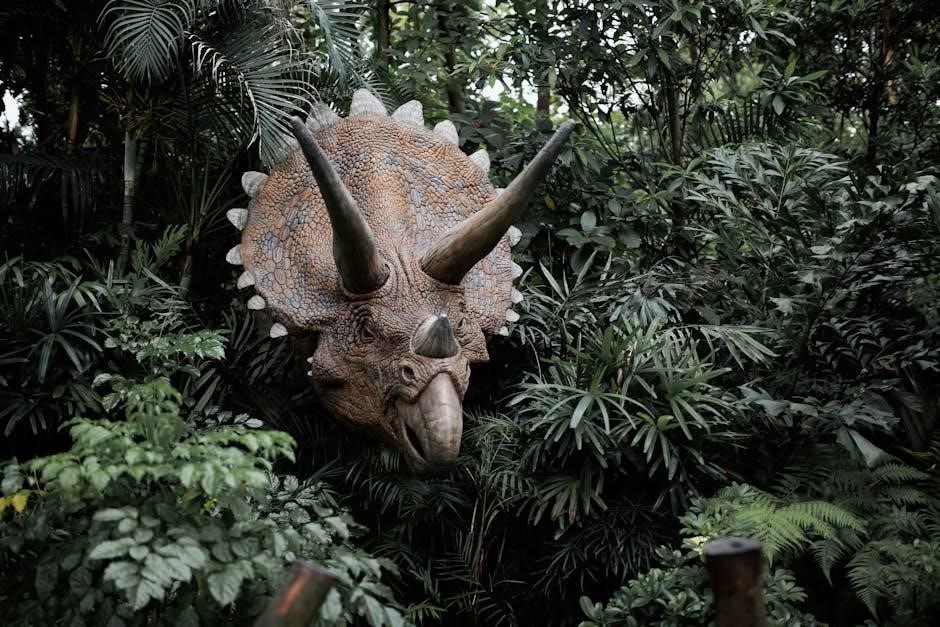
Tyrannosaurus Rex reigned as one of the largest land predators ever to exist‚ dominating the Late Cretaceous period. Its powerful jaws and serrated teeth delivered a bone-crushing bite‚ making it a formidable hunter. Fossil evidence suggests a massive build‚ reaching lengths of up to 40 feet and weighing over nine tons.
Despite its size‚ debate continues regarding its speed and hunting strategies‚ with some theories suggesting both active predation and scavenging behaviors;
Triceratops: The Three-Horned Face
Triceratops‚ instantly recognizable by its large bony frill and three facial horns‚ was a herbivorous dinosaur inhabiting North America during the Late Cretaceous period. These horns likely served purposes of defense against predators like Tyrannosaurus Rex‚ as well as display during mating rituals. Its robust build and powerful legs supported a large body‚ reaching lengths of up to 30 feet.
Paleontologists study Triceratops fossils to understand its behavior and evolutionary relationships.
Velociraptor: The Clever Predator
Velociraptor‚ a feathered dinosaur from the Late Cretaceous period‚ is famed for its intelligence and predatory skills. Though often depicted larger in popular culture‚ it was relatively small‚ reaching around 6 feet in length and 1.6 feet high. Its signature feature was a large‚ sickle-shaped claw on each foot‚ used for pinning down prey.
Paleontological evidence suggests Velociraptors hunted in packs‚ showcasing complex social behavior.
Diplodocus: The Long-Necked Giant
Diplodocus‚ a massive herbivore from the Late Jurassic period‚ is instantly recognizable by its extraordinarily long neck and tail. Reaching lengths of up to 90 feet and weighing over 25 tons‚ it was one of the largest dinosaurs to ever walk the Earth. Its long neck allowed it to reach high vegetation‚ while its tail served as a counterbalance.
Fossil discoveries reveal Diplodocus lived in herds‚ browsing on vast quantities of plants.
Coelophysis: An Early Predator
Coelophysis‚ a relatively small but swift predator from the Late Triassic period‚ provides valuable insights into early dinosaur evolution. Measuring around 9-10 feet in length‚ this theropod possessed hollow bones‚ suggesting an agile and active lifestyle. Remarkably‚ a mass fossil find in Ghost Ranch‚ New Mexico‚ revealed a pack of Coelophysis‚ hinting at pack-hunting behavior.
Paleontologists study its bones to understand dinosaur origins and hunting strategies.
Dinosaur Characteristics
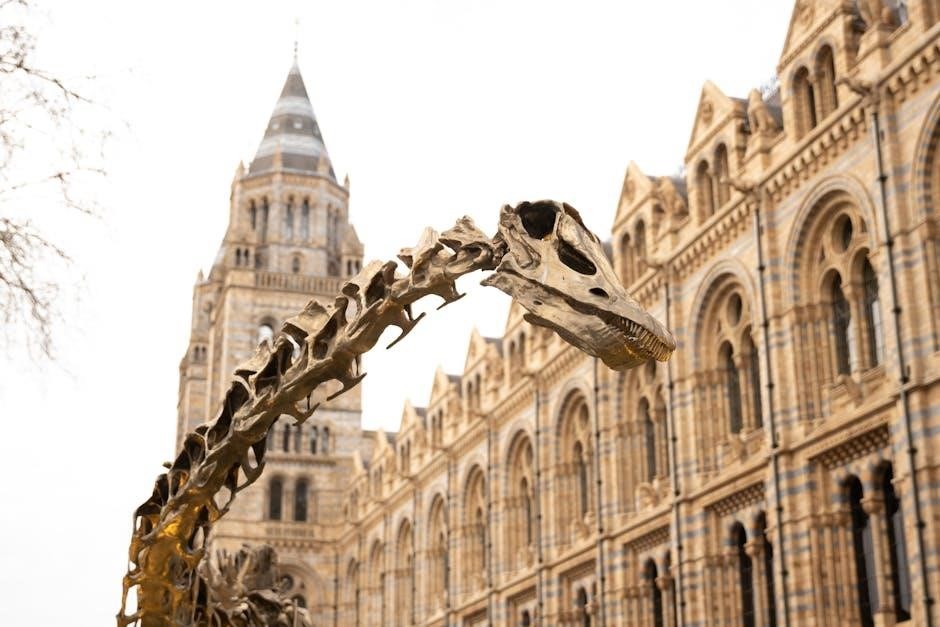
Dinosaurs exhibited an astonishing range of physical traits‚ varying dramatically in size‚ weight‚ and locomotion. Some‚ like the massive Diplodocus‚ reached immense proportions‚ while others‚ such as Coelophysis‚ were comparatively small and nimble; Fossil evidence reveals diverse adaptations for speed and movement‚ from bipedal running to quadrupedal walking.
Researchers analyze bones to determine these characteristics and understand their lifestyles.
Size and Weight Variations
Dinosaur dimensions were incredibly diverse; some were giants‚ while others were relatively diminutive. Diplodocus‚ a long-necked sauropod‚ reached lengths exceeding 80 feet and weighed tens of tons. Conversely‚ Coelophysis was a slender predator‚ measuring around 10 feet long and weighing only a few hundred pounds.
Document analysis details these variations‚ showcasing the breadth of dinosaur morphology and adaptation.
Speed and Locomotion
Dinosaur locomotion varied greatly depending on their anatomy and lifestyle. Velociraptor‚ a nimble predator‚ likely achieved speeds of up to 40 mph‚ utilizing its powerful legs and balanced body. Diplodocus‚ with its massive size‚ moved at a slower pace‚ relying on a quadrupedal gait for stability.
Paleontologists study footprints and bone structure to infer dinosaur speeds and movement patterns‚ revealing fascinating insights into their behavior.
Dinosaur Diet and Feeding Habits
Dinosaurs exhibited diverse feeding strategies‚ broadly categorized into carnivores and herbivores. Tyrannosaurus Rex‚ a fearsome carnivore‚ possessed powerful jaws and teeth designed for tearing flesh‚ preying on large herbivores. Conversely‚ Diplodocus‚ an herbivore‚ utilized its long neck to reach high vegetation‚ consuming vast quantities of plants.
Fossil evidence‚ including tooth shape and stomach contents‚ provides clues about dinosaur diets‚ revealing complex ecological relationships.
Carnivores: Meat-Eaters
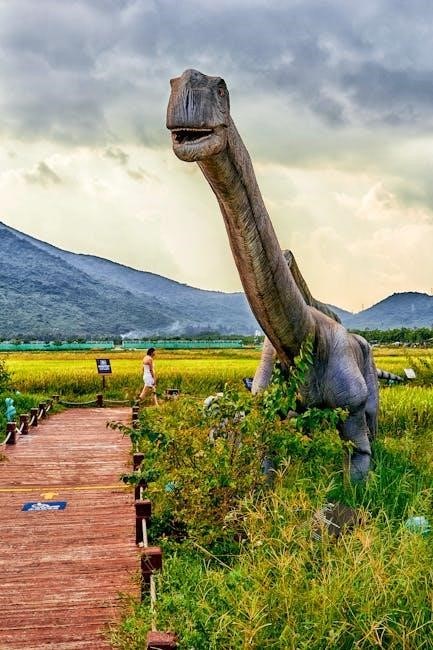
Carnivorous dinosaurs‚ like Velociraptor and Tyrannosaurus Rex‚ were apex predators‚ equipped with sharp teeth‚ claws‚ and powerful muscles for hunting. Velociraptor‚ though smaller‚ was a swift and intelligent hunter‚ likely preying on smaller dinosaurs. T. Rex‚ the “king‚” dominated its ecosystem‚ consuming massive herbivores.
Fossil discoveries reveal adaptations for meat-eating‚ including binocular vision for depth perception and strong jaws for crushing bone.
Herbivores: Plant-Eaters
Herbivorous dinosaurs‚ such as Diplodocus and Triceratops‚ developed specialized adaptations for consuming plants. Diplodocus‚ with its long neck‚ reached high into trees‚ while Triceratops used its beak-like mouth to shear through tough vegetation.
Fossil evidence suggests some herbivores swallowed stones (gastroliths) to aid digestion. These giants required vast quantities of plant matter to sustain their immense size‚ shaping ancient landscapes.
Dinosaur Fossilization and Paleontology
Paleontology‚ the study of ancient life‚ relies heavily on fossilized dinosaur remains. Fossils form through a complex process‚ often beginning with rapid burial in sediment‚ protecting bones from scavengers and decay.
Over millions of years‚ minerals replace organic material‚ creating a durable record. Paleontologists meticulously excavate‚ study‚ and interpret these fossils—bones‚ footprints‚ and even eggs—to reconstruct dinosaur lives.
How Fossils are Formed
Fossilization begins when a dinosaur dies near sediment‚ like mud‚ sand‚ or volcanic ash. Rapid burial shields the remains from destruction by scavengers and the elements. Over time‚ layers of sediment accumulate‚ applying immense pressure.
Minerals gradually seep into the bones‚ replacing the original organic material with stone. This process‚ called permineralization‚ creates a durable fossil. Erosion eventually exposes these fossils‚ allowing paleontologists to discover them.
The Role of Paleontologists
Paleontologists are scientists dedicated to studying prehistoric life‚ primarily through fossil analysis. They meticulously excavate fossils from the earth‚ carefully documenting their location and context. Researchers then clean‚ reconstruct‚ and analyze these remains to understand dinosaur anatomy‚ behavior‚ and evolution.
Their work involves comparing fossils‚ interpreting ancient environments‚ and constructing evolutionary relationships. Modern paleontologists also utilize advanced technologies‚ like CT scans‚ to reveal internal structures.
The Extinction of the Dinosaurs
The Cretaceous-Paleogene extinction event‚ approximately 66 million years ago‚ marked the end of the dinosaurs’ reign. A leading theory attributes this mass extinction to a massive asteroid impact‚ causing widespread devastation. This impact triggered global wildfires‚ tsunamis‚ and a prolonged “impact winter” due to dust and debris blocking sunlight.
These environmental changes led to the collapse of ecosystems and the eventual demise of most dinosaur species‚ paving the way for mammalian dominance.
The Asteroid Impact Theory
The prevailing theory suggests a large asteroid struck the Yucatán Peninsula in Mexico‚ creating the Chicxulub crater. This impact released immense energy‚ causing immediate destruction and long-term atmospheric changes. Evidence supporting this includes a global layer of iridium‚ an element rare on Earth but common in asteroids‚ found in geological records.
Furthermore‚ shocked quartz and tektites – glassy particles formed from melted rock – corroborate a high-energy impact event‚ solidifying the asteroid theory’s prominence.
Modern Research and Dinosaur Studies
Contemporary paleontological research leverages cutting-edge technology‚ including CT scanning and 3D modeling‚ to reconstruct dinosaur anatomy and behavior without damaging precious fossils. Microsoft‚ through its Copilot tools‚ aids in complex research‚ accelerating data analysis and discovery. Researchers utilize these advancements to study bone microstructure‚ growth rates‚ and potential coloration.
These methods provide insights into dinosaur physiology and evolutionary relationships‚ continually refining our understanding of these prehistoric creatures.
Utilizing Technology in Paleontology
Paleontology now heavily relies on advanced technologies like CT scanning‚ creating detailed 3D models of fossils without physical dissection. Researchers employ computational analysis to simulate dinosaur biomechanics‚ revealing how they moved and interacted with their environment. Microsoft’s Copilot assists in processing vast datasets‚ accelerating research timelines.
Furthermore‚ virtual reality and augmented reality applications bring dinosaurs to life‚ enhancing public engagement and educational opportunities‚ fostering a deeper appreciation for these ancient beings.
Microsoft’s Role in Research Tools
Microsoft significantly contributes to paleontological research through innovative tools like the 365 Copilot‚ a deep research agent streamlining complex data analysis. Its capabilities accelerate discoveries by efficiently processing information from diverse sources‚ including fossil databases and scientific literature. The Microsoft Family Safety app‚ while not directly paleontological‚ demonstrates their commitment to accessible technology.
Moreover‚ Microsoft Azure provides scalable cloud computing resources essential for handling large-scale paleontological datasets and simulations.
Dinosaur Field Guides and Resources
For enthusiasts‚ the “Princeton Field Guide to Dinosaurs” by Paul G.S. offers a comprehensive identification resource‚ detailing key species and characteristics. Interactive dinosaur books‚ like those by Emma Yarlett‚ engage younger audiences with lift-the-flaps and fascinating facts. Microsoft Support provides access to information‚ while online resources offer comparative overviews of dinosaur species‚ including details on size‚ weight‚ speed‚ and time periods.
These tools aid in understanding these prehistoric creatures.
Princeton Field Guide to Dinosaurs
Authored by Paul G.S.‚ the third edition of the “Princeton Field Guide to Dinosaurs” serves as a crucial resource for paleontological identification. This guide‚ published by Princeton University Press‚ meticulously details numerous dinosaur species‚ offering a comparative overview of their physical attributes. It assists in discerning differences between species like Coelophysis and Diplodocus‚ aiding both amateur enthusiasts and seasoned researchers in their studies of these prehistoric giants.
Interactive Dinosaur Books for Children
Emma Yarlett’s award-winning interactive picture books offer a hilarious and engaging introduction to dinosaurs for young readers. Packed with lift-the-flaps and peek-through holes‚ these books transform learning about prehistoric creatures into a playful adventure. They present fascinating dinosaur facts in an accessible format‚ sparking curiosity and fostering a love for paleontology in children‚ making complex topics delightfully understandable.